Impacted by recent weather events? We are here to help.

Click here

Flat Chat – Chris Schultz

General Information · 03-12-2025

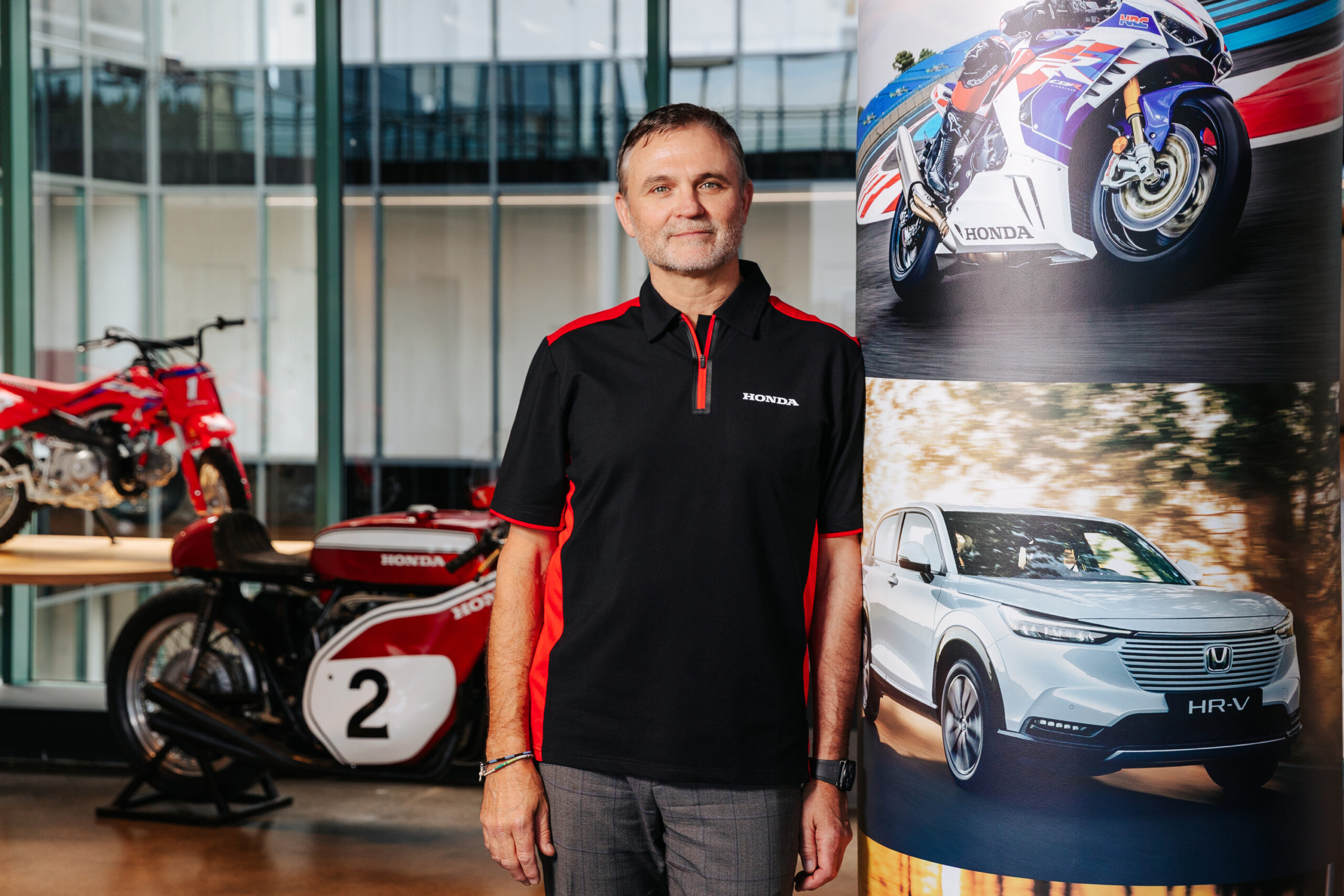
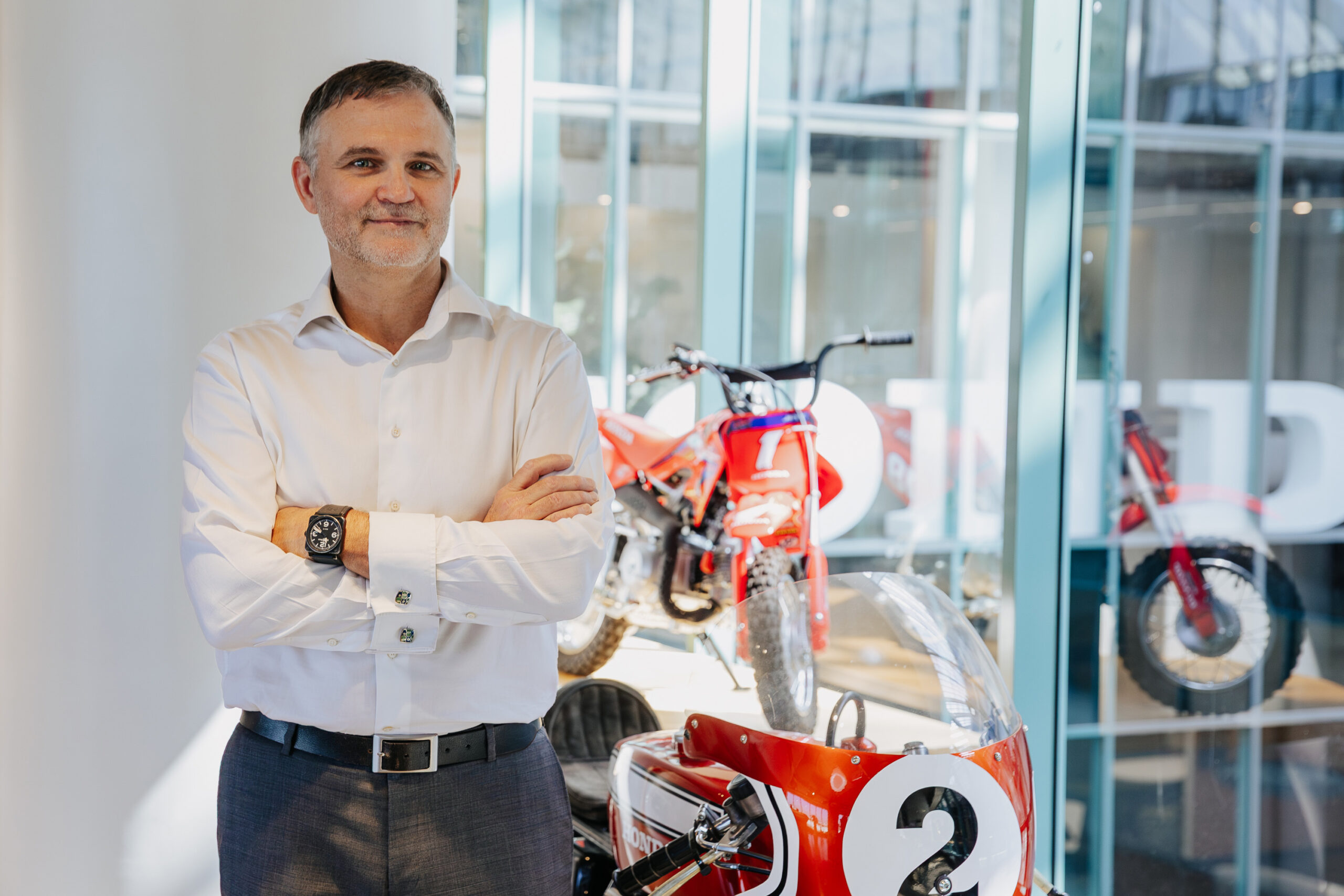
Honda’s recently appointed General Manager Chris Schultz still remembers the day he turned up at home with a brand-new GSX-R.

He was 18 years old and determined, and his mother had already told him he wasn’t allowed to have a motorcycle. He went out and bought one anyway. “And rode it home even though my mum had said no,” he laughs. “Let’s just say it was a short conversation.”

That headstrong streak, mixed with a lifelong affection for motorcycles, has carried Schultz through a career that’s taken him out of the industry and now brought him back again. After starting at Honda in 2008, he cut his teeth in the marine and power equipment division.

Motorcycles weren’t technically his remit, but they were always his first love. “Whilst I’ve been in motorcycles since I was about 18, I joined Honda in the marine manager role and then power equipment… I still got quite involved with some of the motorcycle events and things, just because it was a passion,” he says.

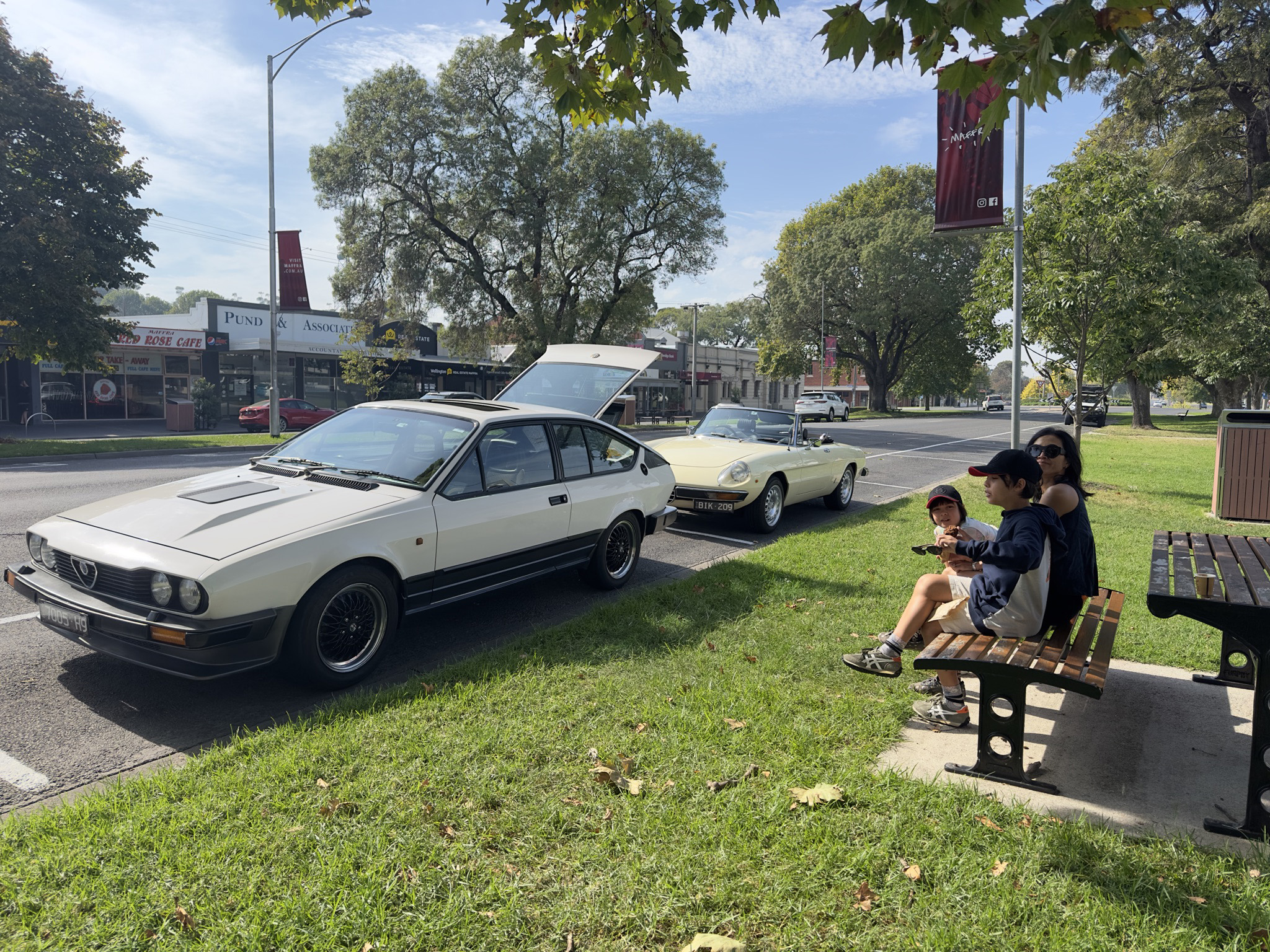
Five years later he departed for Nissan Australia, where he would spend more than a decade in senior positions across sales, product planning, marketing and after-sales roles. The stint broadened his commercial experience, but Schultz admits cars never stirred him in quite the same way as bikes did. “What I like about this industry is it’s more about passion than automobiles… there is a passion involved [with cars] – and I’ve got an old car as well – but the products that we make in this area of the business, whether it’s outboard motors or power equipment or motorcycles, the people that use those have a passion for the brand. So, it’s actually quite nice to be back in this area of the business.”

In early 2025, Schultz returned to Honda Australia as General Manager of Power Sports and Products. His appointment coincided with a period of significant change for the company’s local arm. Long-time industry figure Tony Hinton stepped aside after more than two decades and Schultz was asked to take the reins across both motorcycles and power equipment. It’s a position that blends his previous Honda experience with his own passion for bikes, and it places him at the centre of one of the most important transitions in the brand’s recent history.

As well as the departure of Honda stalwart Hinton, his appointment coincides with a broader shift at Honda. Former American Honda Vice President Jay Joseph was appointed CEO and Director of Honda Australia, replacing Yoshitaka Okamoto, who returned to Japan to take on a senior motorsport role. Joseph brings with him more than 27 years of experience with the brand. Carolyn McMahon, previously Vice President and Director at Honda Australia, took up the role of Managing Director at Honda New Zealand, becoming the first woman to hold the top job at Honda NZ, following a career that included leading the unification of Honda Australia’s automotive and motorcycle operations. While Nobuya Sonoda, who had served as Managing Director of Honda New Zealand since 2014, moved across to Honda Australia as Director of Business Services and New Business Program. Sonoda, who joined Honda NZ in 2002, is now supporting Honda Australia’s broader electrification strategy and future-facing initiatives.

“Now we’ve got Jay, and Carolyn gone to lead Honda New Zealand, Nobu Sonoda’s moved across to Australia – it’s more or less a brand-new board,” he explains. That sense of newness is not limited to the local operation. Globally, too, Honda is loosening its once-conservative leadership structure. “Jay and Carolyn are two of the first presidents that are non-Japanese, globally,” Schultz says. “Honda is moving a little more in that direction.”

For Schultz, the appointment of Joseph, the first American to lead Honda Australia, signals a change in style and philosophy. “There’s a bit more of a licence to test and learn, to step outside the comfort zone,” he says. “Jay brings a different style; he’s really engaged, has strong product experience and he’s doing a lot of dealer visits, which I think says a lot.”

Schultz admits that having so many new faces around the board table at the same time as his own appointment has made the transition easier. “It’s probably a little easier, doing it together,” he says. “We’re all still coming up to speed, but there’s energy in that. It feels like we’ve got permission to think differently.” But while Honda’s leadership is turning a page, Schultz is also mindful of the man whose shoes he now fills.

Tony Hinton was a towering figure in the industry, his name synonymous with Honda Motorcycles in Australia for more than two decades. Schultz is acutely aware of the inevitable comparison. “It’s always a little daunting following someone that has quite a legacy in the industry,” he says. “Tony’s got a long legacy and his family have always been involved in racing. That’s something I’m probably never going to have.”

Instead, he is intent on building his own reputation on different terms. “At Honda, firstly I’d like my legacy to be that I was a nice guy to work with, to start with,” Schultz says. “I think you can have lots of goals, but actually having respect amongst the team and working with the team is one of the key things.”

The industry itself, however, presents challenges that extend well beyond the Honda boardroom. In his first meeting with the Federal Chamber of Automotive Industries (FCAI), Schultz was struck by how under-represented motorcycling still is in Australia’s transport discussions. “I think we’ve got a huge opportunity with scooters,” he says. “I think as an industry, we are not strong enough in our voice with the government that we’re a solution to congestion problems, and the government doesn’t really know.”

As both a motorcyclist and a daily cyclist, Schultz has seen firsthand the inconsistencies in current regulations. “What I see is the amount of people riding bicycles with throttles that are faster than most of our scooters,” he says. “We’ve got a legislation problem, and I think as an industry, that’s a huge opportunity.” From scooters, Schultz sees momentum extending into the broader commuter and learner-approved segments. Demand, he says, is being driven not only by changing demographics but also by technology.

“At the moment, the demand on that bike is huge,” he says of Honda’s middleweight CB650 range, which is available in two guises; one with a conventional clutch and one with Honda’s innovative E-Clutch. “We’ve gone from having a split on that where we were bringing 80 per cent ‘normal’ bike and 20 per cent E-Clutch to actually having all the demand for the E-Clutch.”

For riders new to motorcycling, the attraction is simple. “We’ve got so many new LAMS riders and new riders coming through,” he says. “We always… most of us go, actually, I don’t want you to take my clutch, but once you realise it’s basically an up-and-down quickshifter, [you think] this is quite cool.”

That focus on making motorcycling more approachable extends into the question of electric bikes. Schultz is cautiously optimistic, though he frames the issue squarely in terms of consumer priorities. “If we bought one in and it was a similar price as a petrol one, would it sell? Maybe,” he muses. “I think for commuters it could make sense. I do very few day rides. But what I do is every couple of months is a weekend [away] and do 1400 kilometres over two days. So, for me, I can’t see it fitting, [but] maybe for commuting.”

Schultz’s focus at the time of answering that question was on commuters and LAMS bikes, although Honda’s global strategy has since taken another step with the recent announcement of the WN7 electric motorcycle – the company’s first full-sized production EV, which is due in Australia in 2026.

For now, he points to the ways Honda’s existing expertise could carry across divisions. “In Japan they have the Benly scooter,” he says. “It’s a swap-and-go style battery, and that will fit into other power equipment ones. So, there is certainly that thought of how do you have a similar ecosystem, just because it makes sense.” Even so, Schultz acknowledges that the road to electrification is still winding. “Globally there’s going to be some challenges,” he says. Those challenges don’t appear to have dimmed his personal enthusiasm for riding.

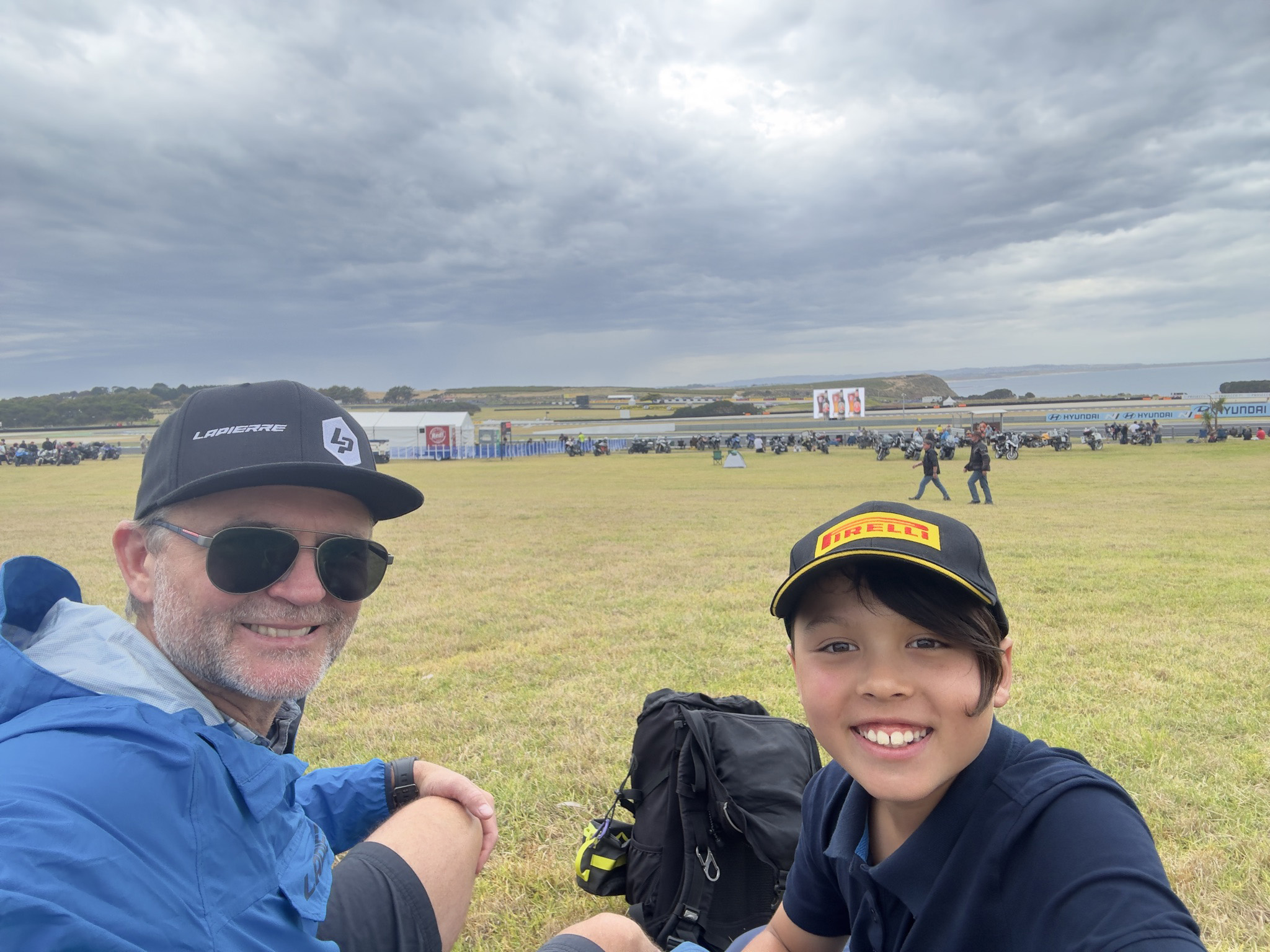
Away from Honda’s boardroom and dealer visits, Schultz still makes time to get out on two wheels. “My riding nowadays, because I’ve got two young kids, is weekends away,” he says. That appetite for adventure extends beyond motorcycling. He learned of his new role with Honda just before heading overseas with his family for a long-planned trip. “Actually I found out about the job two days before we flew out,” he says. “We planned, we took long service leave. So, my son started in high school this year and we wanted to take long service leave and take them overseas.” The destination was Patagonia, a part of the world as rugged as it is beautiful. “And I saw some Australian guys doing a tour on motorbikes and thought, oh, I’ve got to come back and do that,” Schultz says.

For Honda’s new General Manager, it was a fitting reminder that passion for motorcycles – the same passion that gave him the courage to go against his mother’s wishes – still shapes the road ahead.

Words: Kellie Buckley

Related articles