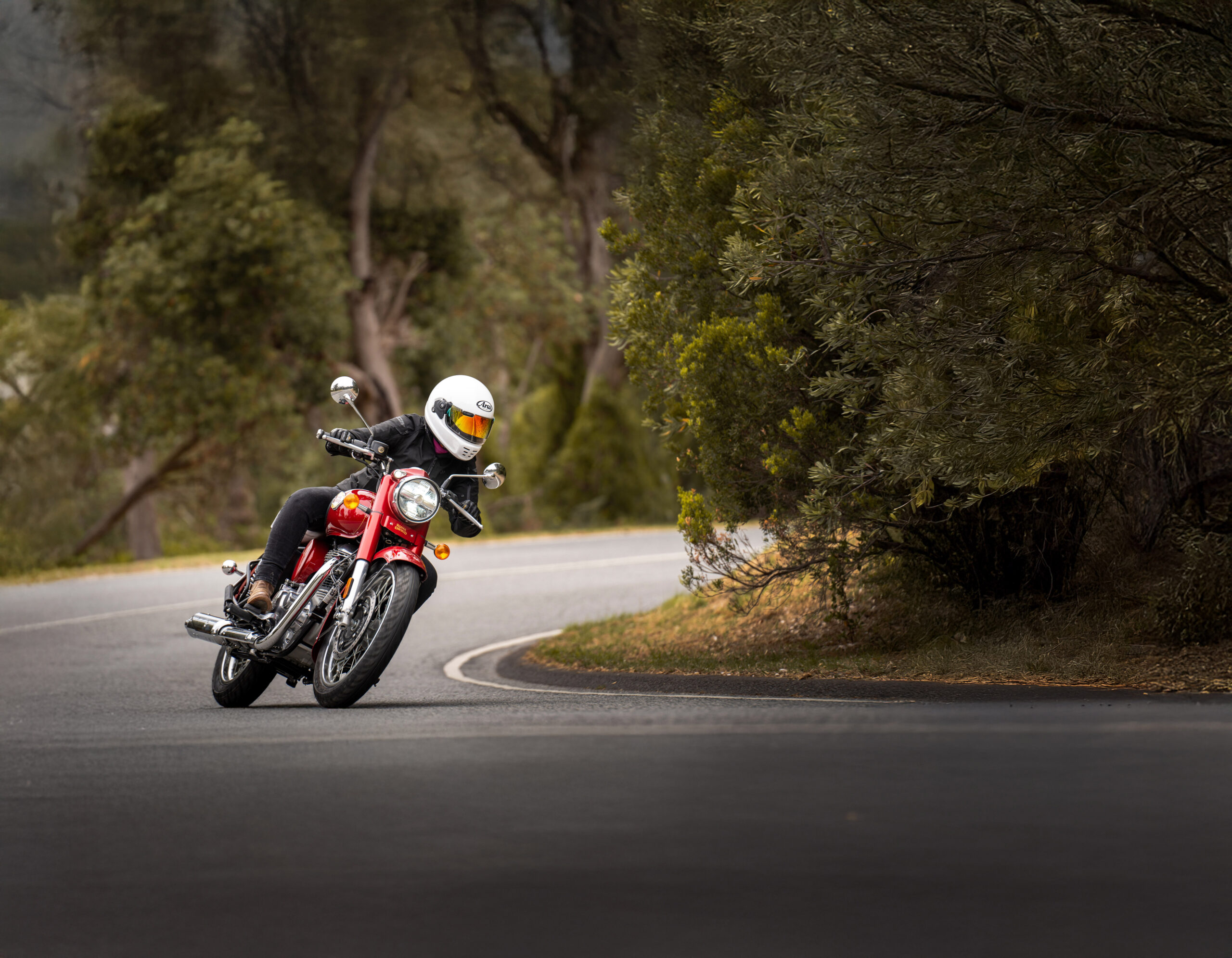
Quick Test – Royal Enfield Bullet 350 and Classic 350
General Information · 30-03-2026
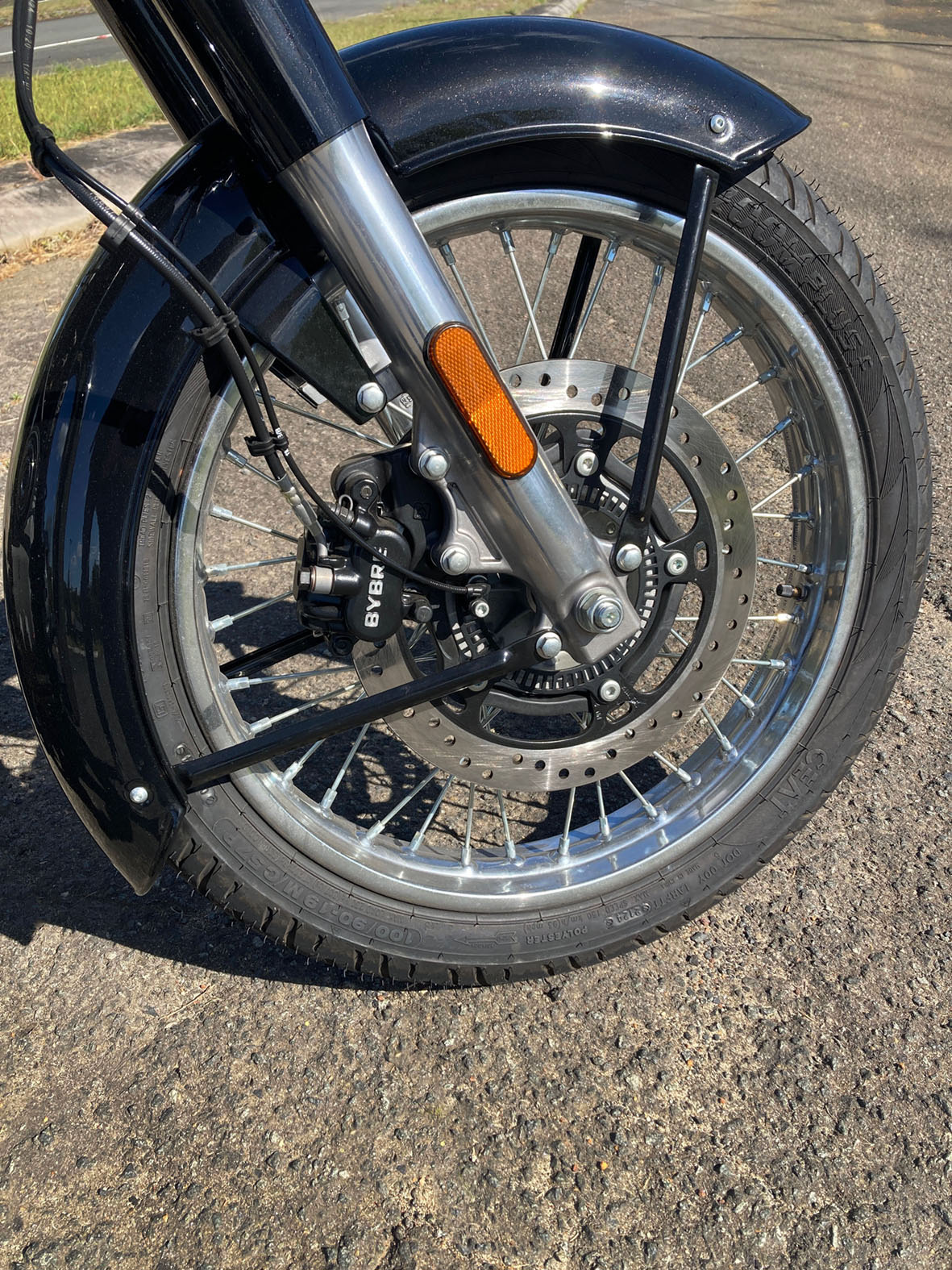
The hardware surrounding that engine is also common. Suspension duties are handled by non-adjustable 41mm telescopic forks with 130mm of travel, matched to twin rear shocks with six-step preload adjustment. Braking is ByBre at both ends, with a 300mm front disc and twin-piston caliper, a 270mm rear disc and single-piston caliper and standard two-channel ABS.
Wheel sizes are the same, with a 19-inch front and 18-inch rear shod in relatively narrow-profile Ceat Zoom tyres. Dimensions align, too. Curb weight is a claimed 195kg for both bikes, seat height sits at 805mm, wheelbase measures 1390mm and fuel capacity is 13 litres.
On paper, there is no meaningful performance or chassis advantage to be found either way. That common ground means any difference you notice between the Bullet 350 and Classic 350 does not come from mechanical superiority or shortfall, but from how the same components are arranged, presented and experienced by the rider. And that nuance is something that the Indian manufacturer has become very adept at over recent years.
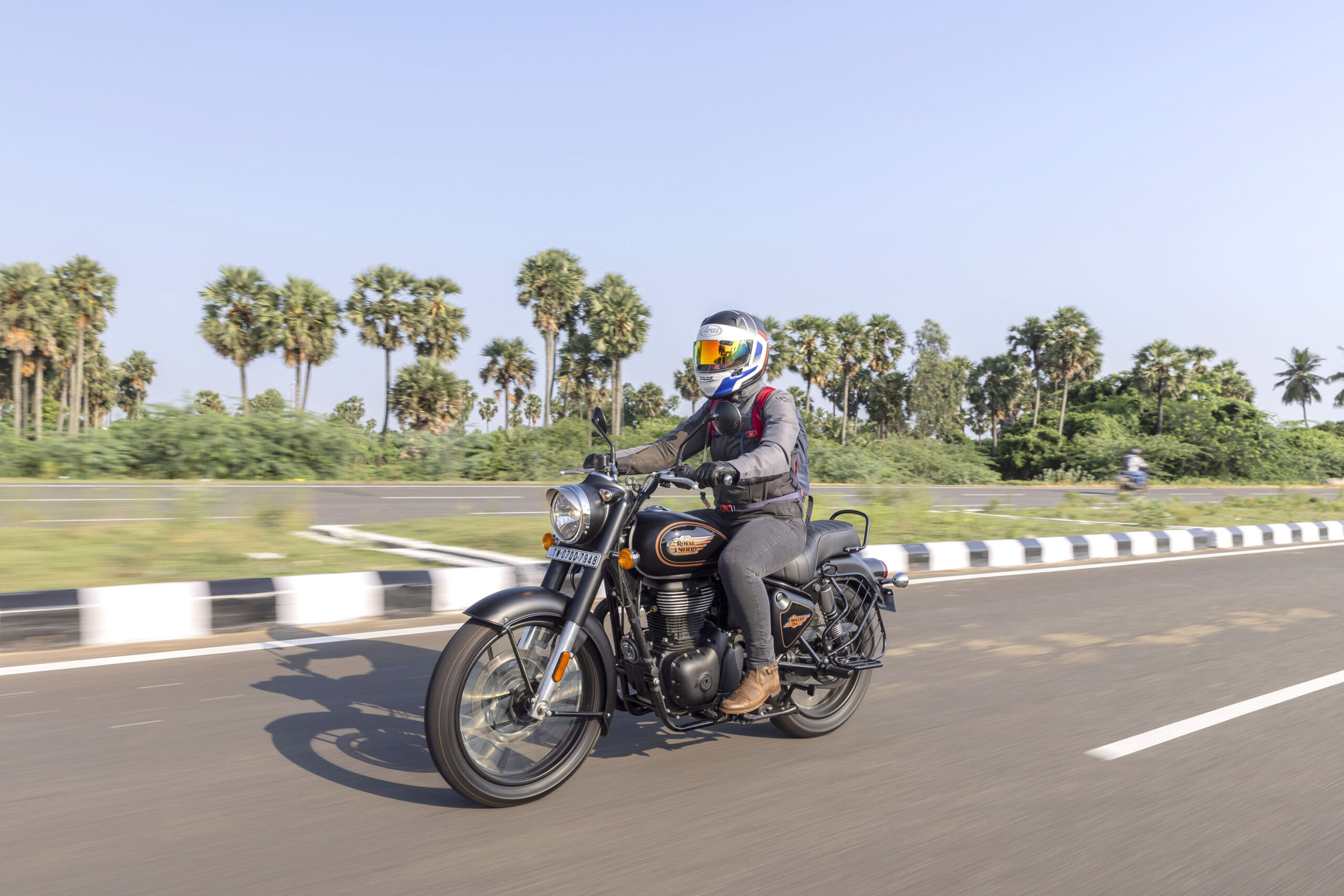
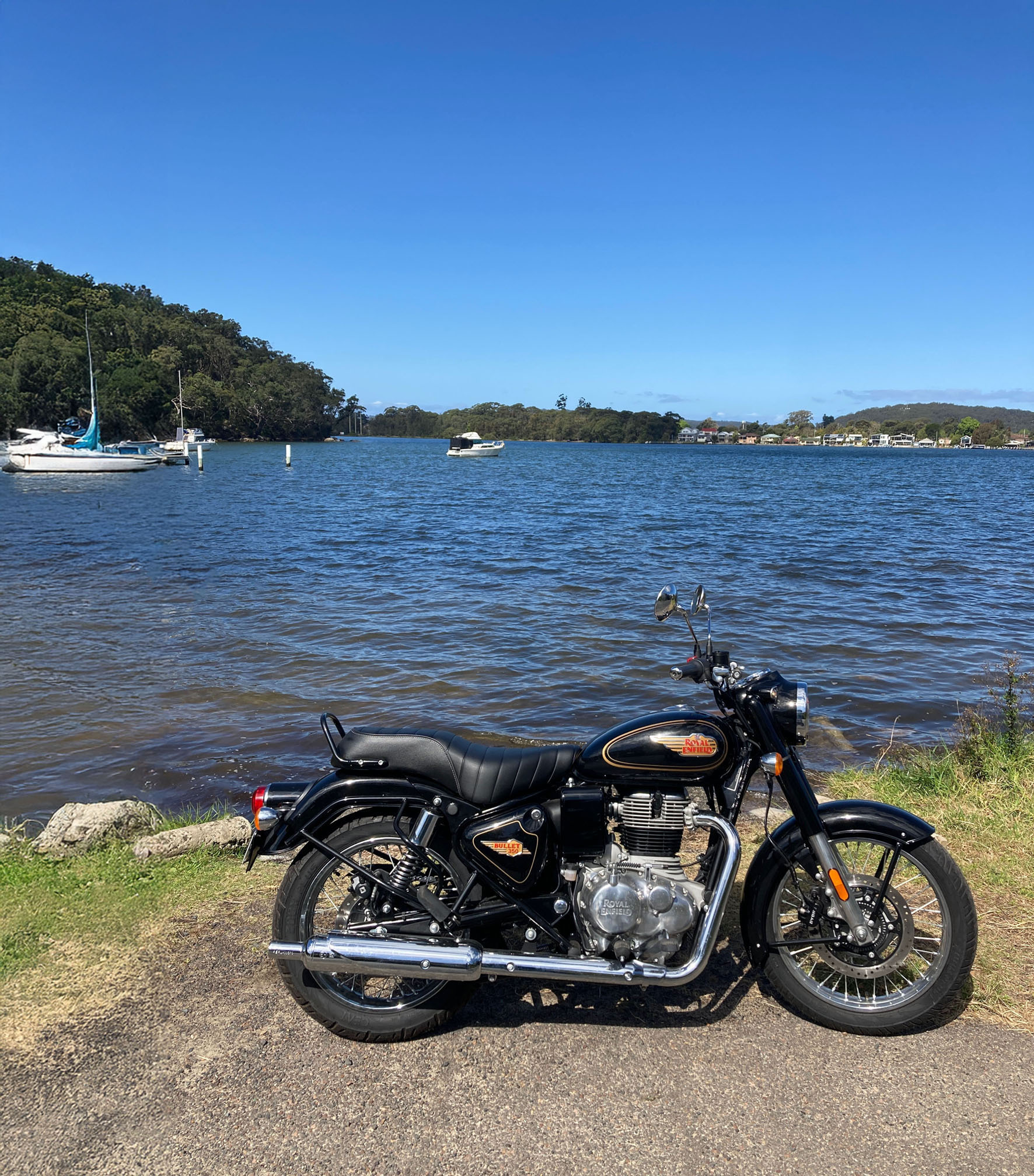
The Bullet 350’s styling is inseparable from its history. First introduced in 1932 and in continuous production for more than nine decades, it has evolved incrementally rather than reinvented. Its current form is not a retro interpretation so much as a modern continuation of a recognisable design that has been refined through use.
That history explains the Bullet’s appearance. Elements like the stepped seat, long front guard and sidemounted peashooter exhaust are there because they have always been there. Even details such as the headlight nacelle, integrated analogue dash and small parking ‘tiger eye’ lights are carried over, reinforcing the sense that little has been added unless it needed to be.
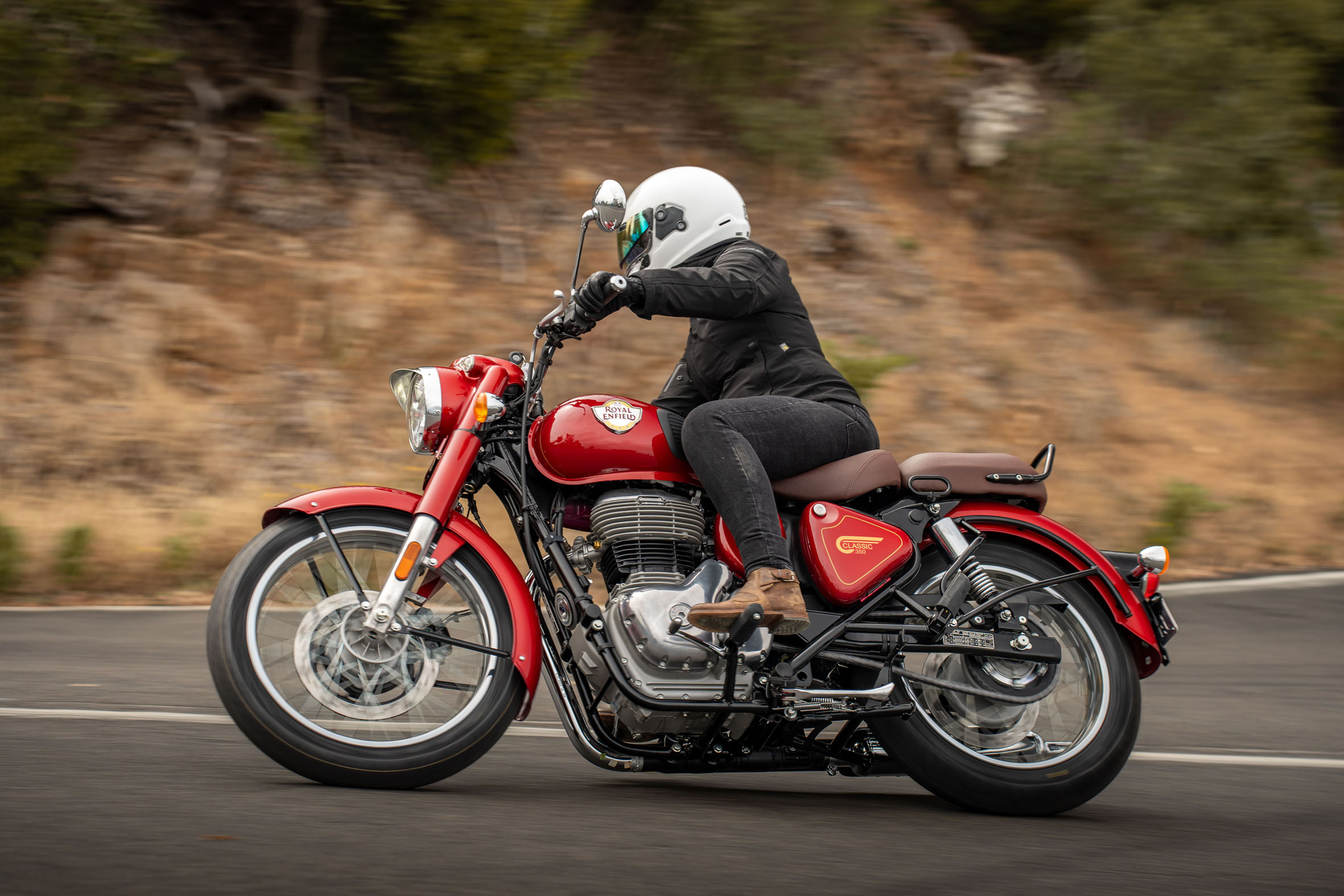
The Classic 350 is offered in five distinct variants, each altering the bike’s character through specification rather than mechanics. Entry-level Heritage and Heritage Premium models keep things relatively traditional, pairing wire-spoke wheels with simpler finishes and period-style details. The Signals variant leans into a military-inspired aesthetic, while the Dark and Chrome models introduce cast wheels, additional trim highlights and higher levels of equipment, including the Tripper navigation pod and adjustable levers.
By contrast, the Bullet 350 remains visually consistent across its versions. Changes are limited to colour and detailing rather than equipment or stance, reinforcing its sense of continuity. Where the Classic uses specification to shape the range, the Bullet relies on repetition and familiarity, presenting the same silhouette regardless of trim.
Priced at $7890 ride-away, the Bullet 350 sits below the Classic 350 line-up, which runs from $7990 to $8790 depending on specification, despite sharing the same mechanical package. The shared J-series engine defines both bikes. Power delivery is linear and unhurried, with usable torque arriving early and remaining consistent through the mid-range.
Short-shifting suits the motor best, with both bikes responding well to a relaxed approach to throttle inputs and gear changes. In practice, the experience is largely identical. Second, third and fourth gears do the bulk of the work, with fifth acting as an overdrive for steady cruising rather than overtaking.
Acceleration is confident enough for everyday riding, but neither bike encourages stretching the engine beyond its comfort zone. With identical suspension layouts, wheel sizes and tyre profiles, expectations around ride quality should be broadly the same on both bikes. And in many ways, they are.
Both the Bullet 350 and Classic 350 are set up with comfort as the priority. Broken bitumen, patched surfaces and even gravel roads are absorbed without fuss, the chassis remaining stable even when the suspension is working hard. At any speed, with generous sidewalls and a relatively heavy steel frame, the result is a predictable and planted ride.
The Bullet’s composure stood out most clearly during testing on the chaotic streets in and around Chennai in India. Poorly maintained roads, deep potholes and constant surface changes place sustained demands on suspension and chassis, and the Bullet absorbed that disorder with little drama. It tracked straight, resisted deflection and allowed me to remain seated more often than expected, even in conditions where logic might suggest standing to manage impacts.
That speaks less to a unique behaviour and more to how the shared platform responds when pushed well outside typical Australian riding conditions. Tested on local Aussie roads, the Classic 350 delivered the same underlying comfort and stability. At steady cruising speeds, it feels composed and reassuring, dealing confidently with less-than-ideal surfaces.
Smooth inputs and an unhurried pace suit both bikes best, and by doing so really allows you to just to be present and enjoy the ride. With so little separating them mechanically, the choice between the Bullet 350 and Classic 350 comes down to presentation rather than capability. Both bikes deliver the same pace, the same compliance on real-world roads and the same mechanical simplicity.
What separates them is styling and finish rather than any difference in how they perform. The Bullet 350 suits riders who value tradition and understatement. The styling does not change dramatically between variants, the cockpit remains sparse and the experience feels consistent regardless of where or how it is ridden.
The Classic 350 offers a more expressive option with the same fundamentals. Its broader range of finishes, trim levels and visual details allow owners to choose how prominently they want that heritage displayed. Features such as Tripper navigation, adjustable levers on higher-tier models and the expanded colour palette make the Classic feel more configurable, even if the ride itself remains unchanged.
Neither approach alters the day-today experience; both bikes suit relaxed commuting, unhurried weekend rides and enjoyment over urgency. The decision comes down to styling, specification and price.
Bike test: Kellie Buckley Photography: JPMedia and Royal Enfield
Visit royalenfield.com.au