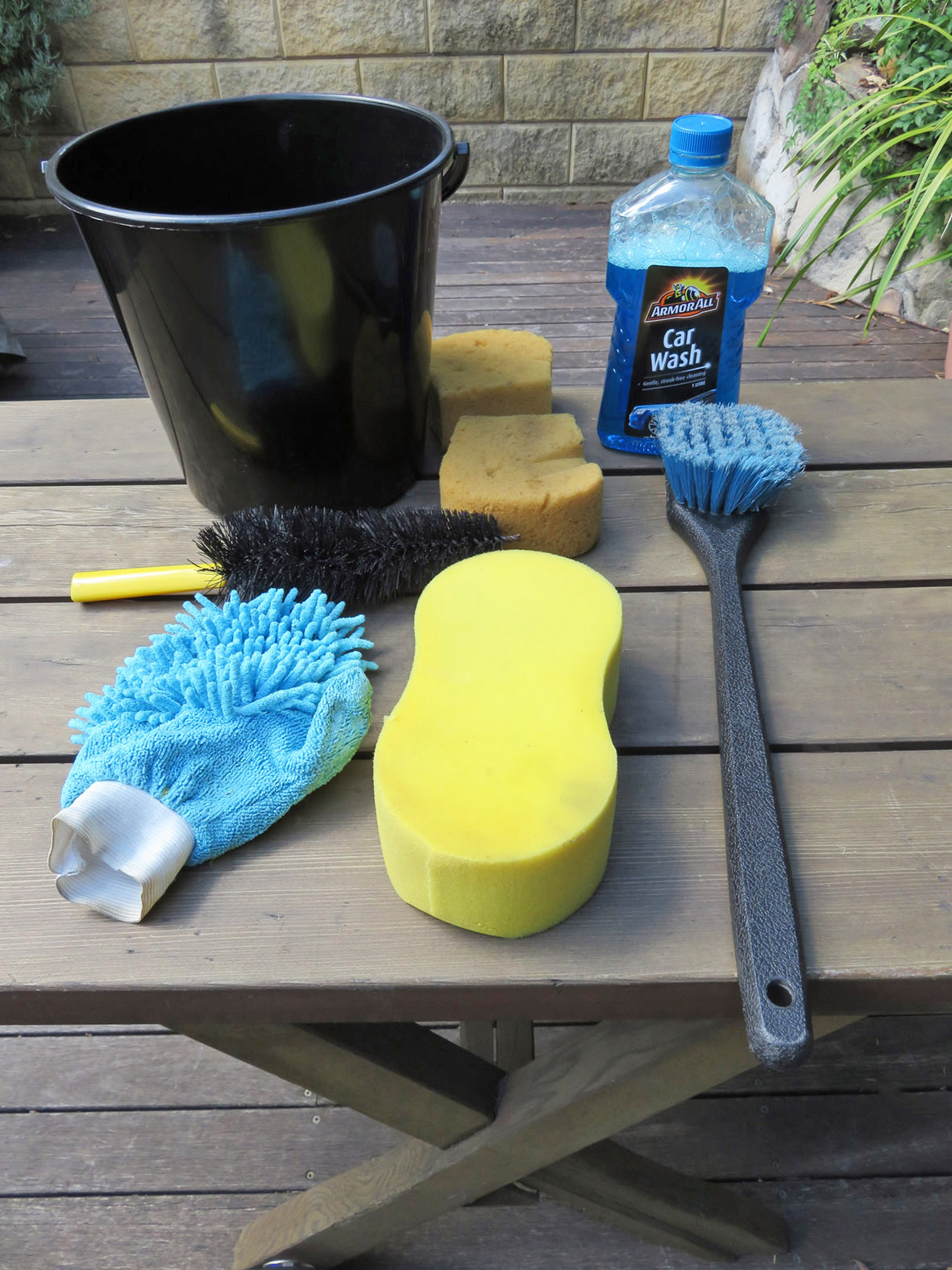
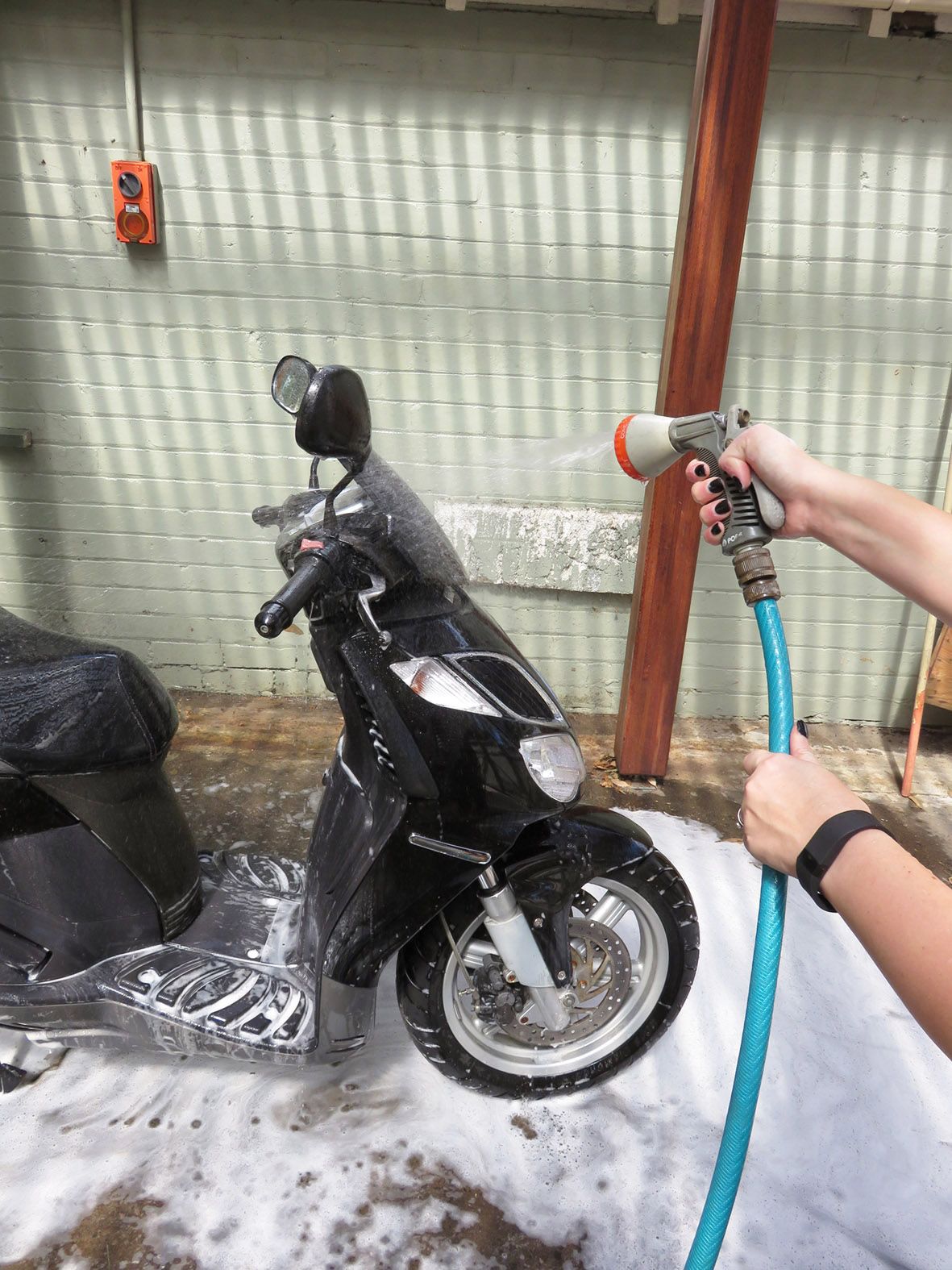
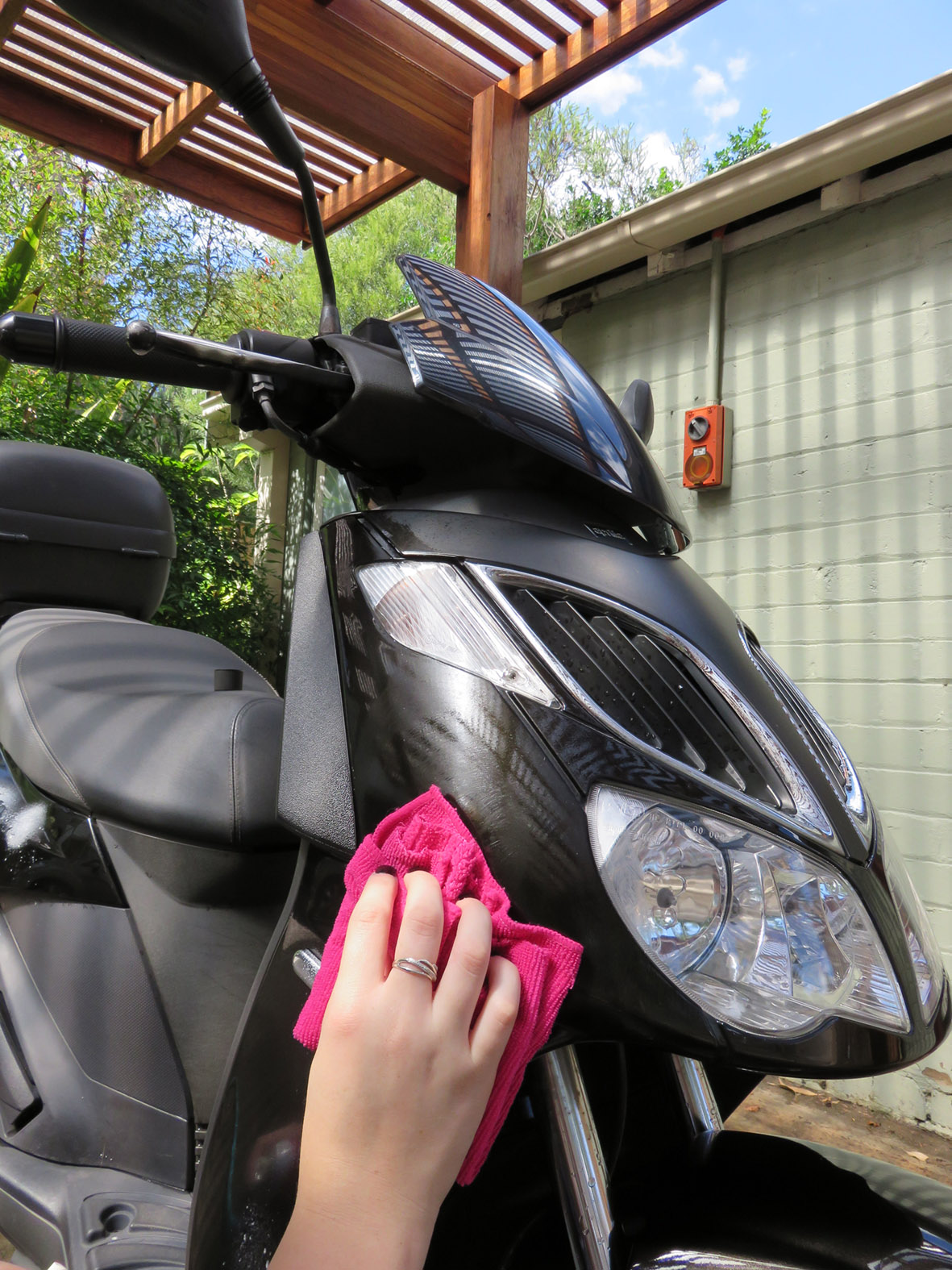
At its simplest, washing a bike can be done with a bucket of warm water, a quality car-wash detergent and a soft sponge, followed by a chamois for drying. Unlike cars, bikes have countless exposed components and tight spaces, so a quick wash is often only a starting point. But whether it’s a quick wash or a thorough clean, a few rules always apply: work from the top down, leave the wheels until last as they inevitably dirty the sponge, be mindful of electrical components and allow plenty of time.
Always wash a bike in the shade to avoid streaks and never use harsh cleaners that could damage tyres, plastics, controls, grips or seat. Clean bikes are easier to inspect and will quickly reveal leaks or developing issues. For a thorough clean, a spray-on cleaner can help lift grease and grime before rinsing.
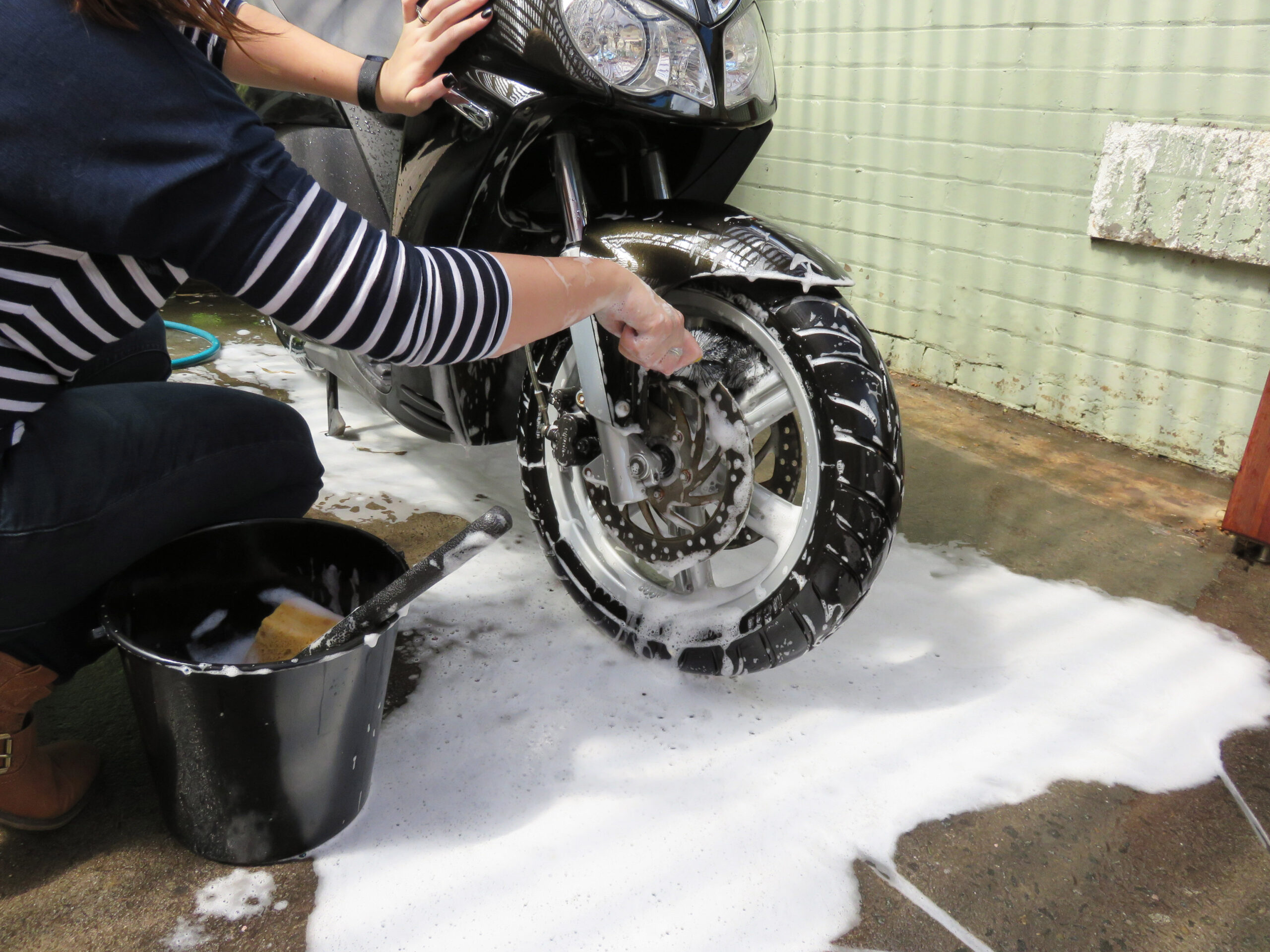
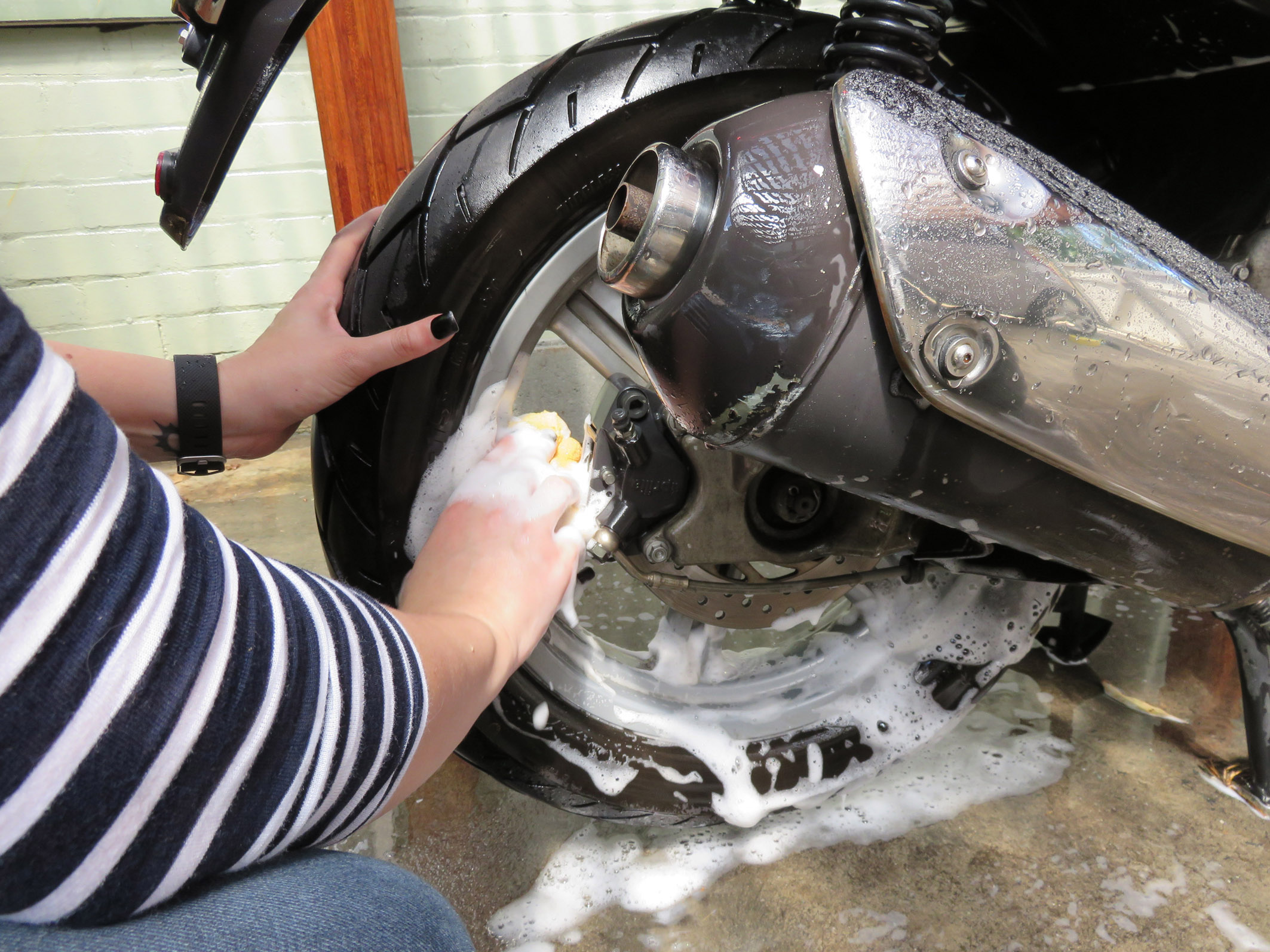
Start washing from the top, rinsing your sponge regularly to avoid dragging grit across paintwork. Plastics benefit from a dedicated plastic cleaner, engines from a light degreaser and seats from nothing more than mild soapy water. Brushes are invaluable for hard-to-reach areas, while wheels require extra care due to brake dust, chain lube and sharp rotors.
Once rinsed, remove excess water with a chamois or compressed air, then polish painted surfaces using a quality polish. Finish by wiping down controls, mirrors and suspension, checking fluids, tyre pressures and lubrication points. A clean bike supports good maintenance as much as it reflects pride in ownership.
Words and photography: JPMedia
 1300 960 437
 Partner Login